
track
Impermanent Loss
What impermanent loss is, the formula behind every calculator, worked examples for 2x and 3x price moves, and how much fee income it takes to break even.
2 pulses · latest Oct 28 · Wed

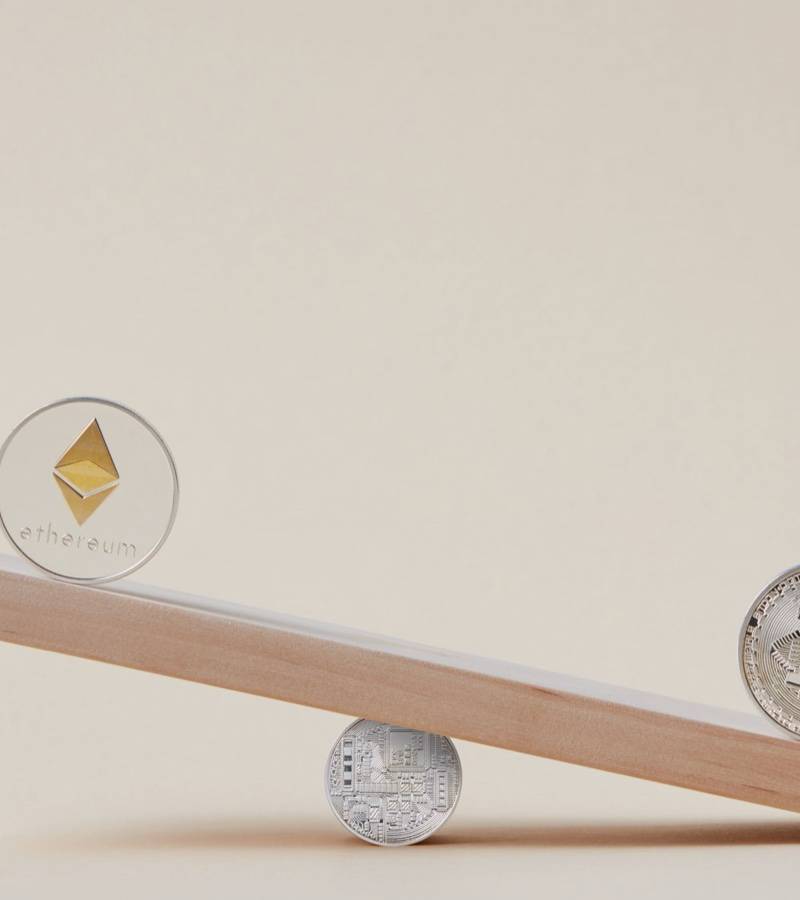
Photo: Mike Anderson on Pexels
Impermanent loss is the gap between what a liquidity provider's share of a pool is worth and what the same tokens would be worth if they had simply been held. It happens whenever the price of the pooled tokens moves away from where it was at deposit, in either direction. It is called impermanent because it shrinks if the price returns, but it becomes permanent the moment you withdraw.
Why does impermanent loss happen?
A constant product pool rebalances itself on every trade. When one token rises, traders buy it out of the pool until the pool's price matches the wider market, so the LP ends up with less of the token that went up and more of the one that did not. Holding would have kept the original amounts. The difference is impermanent loss, measured before fees.
What is the impermanent loss formula?
For a two-token constant product pool where the price ratio changes by a factor r, the value of the LP position relative to holding is 2 times the square root of r, divided by 1 plus r. Subtract one and you have the loss. A 2x move costs about 5.7 per cent against holding, a 3x move about 13.4 per cent, a 4x move 20 per cent. The formula is symmetric: a halving costs the same as a doubling. Every calculator online runs this formula. Our read on the impermanent loss calculator derives it and shows what it leaves out.
Do fees make up for it?
Sometimes. Swap fees accrue to LPs the whole time the position is open, and on a busy pool with a range-bound price they can outrun the loss. On a pool with low volume and a trending price they usually do not. Our read on when fees beat the price move works out the fee yield it takes to break even for a given move.
How does concentrated liquidity change it?
Pools that let LPs choose a price range, such as Uniswap v3, put the same capital to work across a narrower span. That earns more fees per unit of capital while the price stays in range, and it magnifies impermanent loss by the same mechanism. If the price leaves the range, the position turns entirely into the weaker token and stops earning fees until the price returns.
How PolyCasino covers impermanent loss
Every pulse starts from the AMM math in the protocols' own whitepapers and works a numeric example before any judgement. Read the calculator piece first for the formula, then the fee break-even.
Latest in Impermanent Loss
every pulse on this track, newest first

Impermanent LossOct 28 · Wed · PolyCasino
Impermanent Loss Crypto: When Fees Beat the Price Move
A 2x price move costs a Uniswap LP 5.7% versus holding. Here is how much fee income it takes to break even, net of the protocol cut and range exits.
Impermanent LossOct 16 · Fri · PolyCasino
Impermanent Loss Calculator: What the Formula Hides
The math behind every impermanent loss calculator: a 3x move costs 13.4% vs holding, before fees, range choices and price path change the real result.