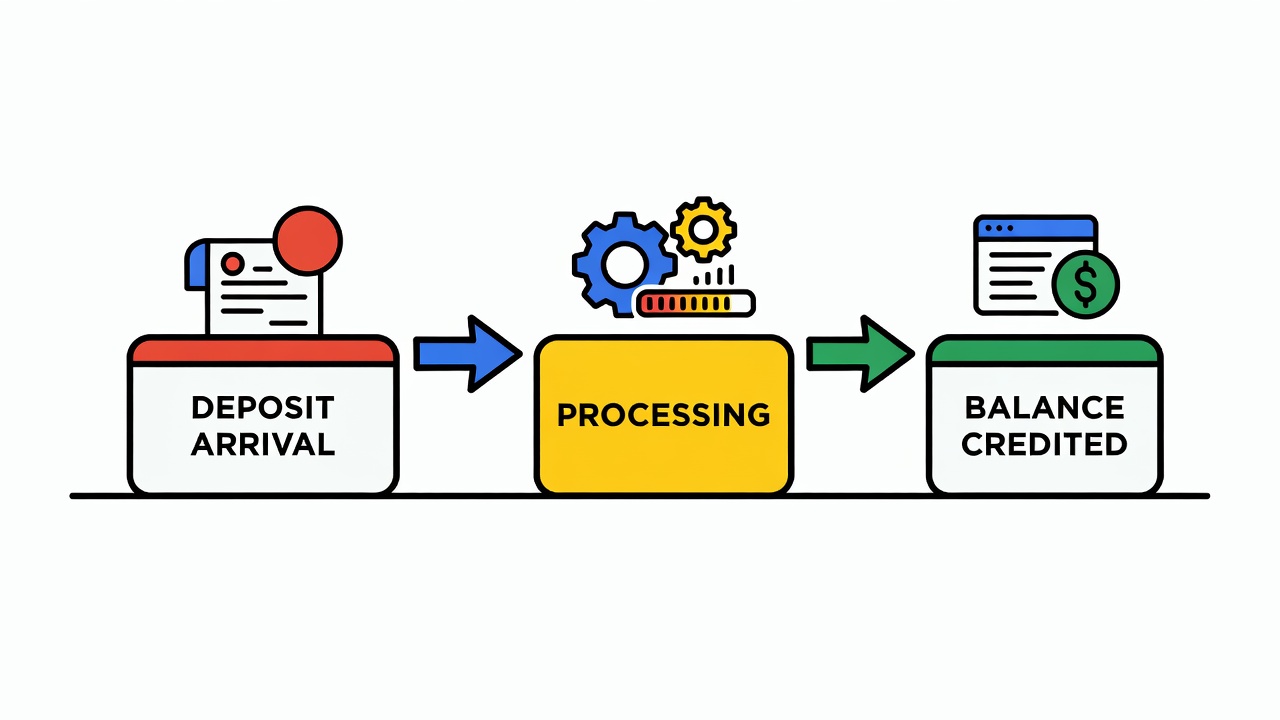
Trustly exists because banks got tired of being the middleman between you and your desire to gamble online. The payment processor removes friction without removing caution. You link your bank account once. The casino sees only a confirmation code, never your actual details. This is the transaction model that works for both sides.
Pay-N-Play casinos use Trustly as their primary on-ramp, and the effect is immediate: no separate login. You arrive, you play, you withdraw. The money moves back to your account within hours, sometimes minutes. There is no second account held in limbo. There is no casino wallet floating in perpetuity. This matters because it means the money remains psychologically yours until you actively choose to deposit more.
Traditional online casinos require you to create an account, set a password, and verify your email. Then you fill out forms about your gambling habits, your country of residence, your occupation. Then you navigate to the cashier, choose a payment method, enter card details, and wait. The friction is deliberate. It is supposed to create a moment of reflection. Sometimes it works. Often it does not.
The psychological difference is subtle but real. With Pay-N-Play, you are performing a single action: linking your bank account for this session. You are not building an account that persists. You are not establishing an identity in the casino's database. You are borrowing access, not owning membership. The framers of this system understood something true: the moment of reflection comes not from complexity, but from directness. Make the action too easy and people notice they are doing it. Make it too hard and people resent the friction and push through anyway.
Trustly handles the payments through what amounts to a direct bank connection. You authorize the transaction. Trustly confirms it with your bank. The casino receives a token saying yes, this person is legitimate. The casino does not see your account number, does not see your full name, does not retain any payment information beyond what it must for AML compliance. Your bank sees the transaction. The casino does not see your bank.
This architecture solves a genuine problem. Casinos have long been forced to choose between being in compliance with strict regulations or being accessible to players in places where credit cards are difficult to obtain, or where banks simply do not work with gambling operators. Trustly sits in the middle: licensed, audited, compliant. The casino can operate in Sweden, Germany, Italy, Spain, without needing relationships with payment processors who have decided that gambling is too risky.
The downside is availability. Trustly works in forty countries. It does not work in the United States or Canada or Australia. If you live in a regulated jurisdiction where traditional payment methods are available, Pay-N-Play offers convenience, not liberation. If you live where the borders are stricter, Trustly is sometimes the only option that moves money at all.
The accounts themselves are held for a limited time. Some casinos erase them after ninety days of inactivity. Some keep them longer. The idea is that a Pay-N-Play account is not really an account. It is a transaction. This has a side effect: you cannot use loyalty programs across sessions. You cannot build a point balance. Every visit starts at zero. Some players prefer this. It removes the sunk-cost feeling. You leave without guilt about unspent credits.
Deposit limits work differently too. Because the money moves directly from your bank, your bank's own limits apply first. If your bank allows a transfer of two thousand dollars, that becomes the ceiling, not the casino. Some casinos add their own limits on top. Others defer entirely to the bank. This creates a strange inversion: the casino is less powerful than the player's own financial institution.
The security model is clean. Your bank authenticates you. Trustly authenticates the transaction. The casino trusts both. There are fewer places for credentials to hide. There are fewer databases where your information sits in perpetuity. This is not magic, but it is better.
Why This Matters
For the player who wants to gamble and then leave, Trustly and Pay-N-Play are the closest thing to a direct transaction that online gambling has achieved. There is no casino wallet to manage. There is no account loyalty pulling you back. There is only money moving from your bank to the house and back again. Some find this liberating. Some find it too transparent. It depends what the seventy-two hours of daydream is worth.