
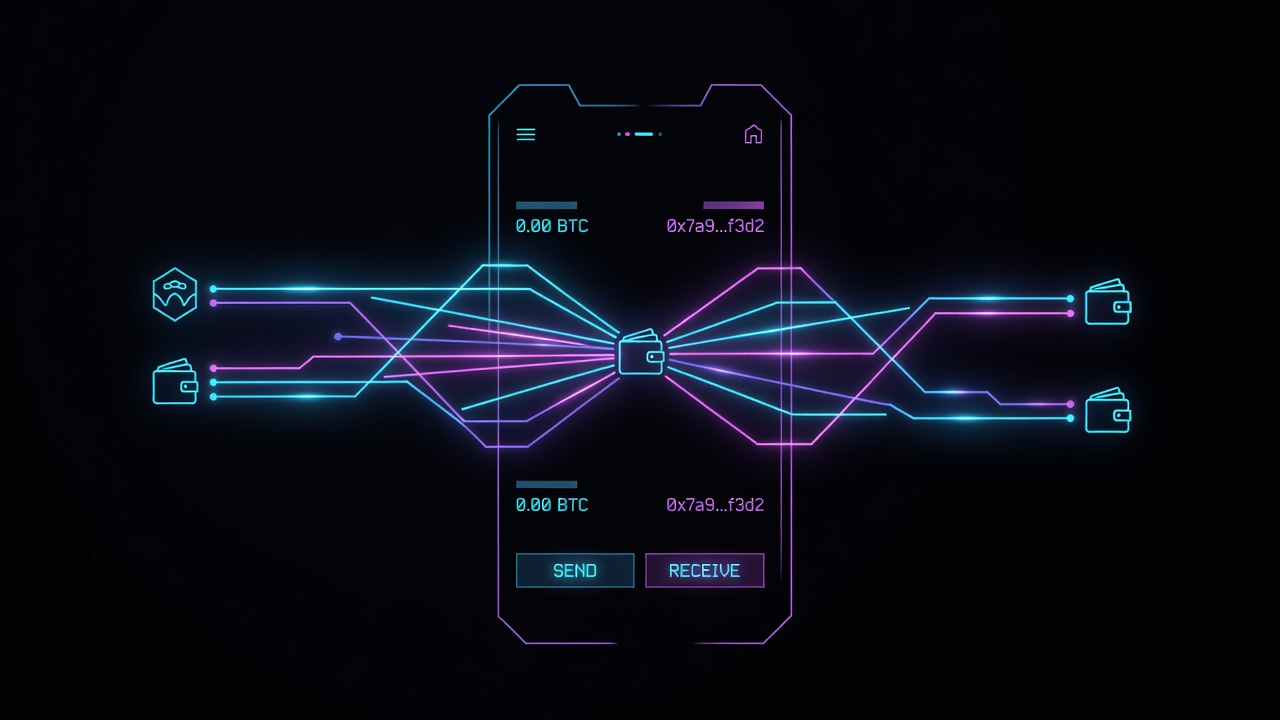
I spent twenty years watching criminals move money. The techniques don't change much. Crypto just makes it faster and it leaves a permanent record if you know where to look. I'm going to show you how the transfer actually works, the mistakes people make, and what law enforcement sees when they're tracing a transaction.
The Basic Path
You start at a crypto exchange. Kraken, Coinbase, Binance. You hold Bitcoin or Ethereum in your account there. The casino operator has a wallet address. It looks like a long string of characters: 1A1z7agoat2Bx3h7KZLehhhh5SiUNjnEi7. You copy that address. You go to your exchange account, select "withdraw," paste the address, choose your amount, and confirm.
The exchange broadcasts your transaction to the blockchain. The miners process it. The money moves to the casino's wallet in about 10 minutes for Bitcoin, 2 minutes for Ethereum. You see a confirmation number called a transaction hash. That hash is permanent. It exists on the blockchain forever. Anyone can look it up using a block explorer like Blockchain.info or Etherscan.
Where Amateurs Stumble
Most people make one mistake right here: they copy the address wrong. A single character off and the money goes into the void. It's permanent. Not reversible. Not recoverable. I've seen people lose 50,000.00 Euros to a typo. The exchanges don't refund. No insurance. The money is gone.
The smart ones use QR codes. You don't type the address. You scan it with your phone. The error rate drops to near zero. If you're moving serious money, you scan.
What Happens on the Casino Side
The casino operator watches for incoming transactions to their wallet address. Modern operators use a service like BitPay or Coinsetter that auto-converts crypto to fiat instantly. The transaction hits their wallet. The service sees it, converts it to EUR or USD at the current exchange rate, deposits it to the casino's bank account, and credits the player's account with the fiat equivalent.
This all takes maybe 20 minutes. The player now has chips or credits to play with. The casino has a record of the deposit. The blockchain has a record of the transaction.
KYC and The Audit Trail
Here's where it gets interesting. The casino has regulatory obligations. If a player deposits 50,000.00 equivalent in crypto, the casino must know who that player is. Real name, address, proof of identity. No anonymous wallets, no shadows. The player has to submit documentation.
But there's a gap. The casino knows the player. The blockchain knows the wallet address. What it doesn't necessarily show is the connection between the player's name and the wallet address they owned. If the player funded the wallet through a crypto mixer (a service that scrambles transaction history), the chain of custody gets murky.
Law enforcement can subpoena exchange records. Binance, Kraken, Coinbase all keep transaction logs. They log customer identity, wallet address, and timestamp. If you withdrew from Kraken to a casino address on March 15, and Kraken has your passport on file, law enforcement can connect your name to that transaction. The mixer in between doesn't help much; the exchange still logged it.
The Tax Problem
Here's what I saw most often: people moving crypto to avoid reporting it as income. They think if they gamble with it and lose, no tax is owed. That's wrong. The moment you converted fiat to crypto, that was a taxable event. The difference between your cost basis and the current value is a gain or loss. That gain is reportable to the IRS or your local tax authority.
If you won money at the casino on that crypto, you owe taxes on the win. If you lost, you get a loss deduction against other income. The IRS knows this. They've been collecting transfer records from exchanges for years. They cross-reference casino reports. If you reported 20,000.00 in casino income but your exchange shows you transferred 50,000.00 worth of crypto to a casino, the mismatch gets flagged.
Operational Security
If you want to be serious about this, use a hardware wallet for intermediate storage. Don't hold large amounts on an exchange. Move your crypto to a device you control (Ledger, Trezor), then when you want to play, move only what you plan to spend to the casino wallet. This reduces your window of exposure and compartmentalizes risk.
Second: use the same exchange account and identity for all your movements. Splitting deposits across five different exchange accounts to avoid attention will trigger AML flags. The exchanges are watching for layering. Consistency is less suspicious than fragmentation.
Third: write it down. Date, amount, exchange, casino address, transaction hash, casino account it landed in. When tax season comes, you'll need this.
What Regulators See
Under FinCEN guidance, casinos file Currency Transaction Reports for deposits over 10,000.00 USD equivalent. They file Suspicious Activity Reports if the pattern looks like layering or structuring. Crypto transactions are explicitly covered since 2019.
If you move 50,000.00 in Ethereum to a casino from an exchange on a Monday, lose it in three days, then repeat the pattern on Friday, the casino files a SAR. FinCEN reviews it. A federal agent might contact the casino or the exchange asking questions. No charges yet. Just questions. But the record exists.
The transfer is traceable. The blockchain makes it permanent. If there's ever an investigation, that transaction will be one of the first things looked at. Move money knowing that.