I buy a two-dollar lottery ticket every Friday. The expected value is minus eighty cents. I know this. The ticket itself is worthless. What I'm actually paying for is seventy-two hours of absolute permission to think about something impossible: what if I won. I get to rewrite my life on a spreadsheet. I get to redesign my kitchen. I get to imagine my sister's face when I tell her. That's worth two dollars. That's not delusion. That's economics of imagination.
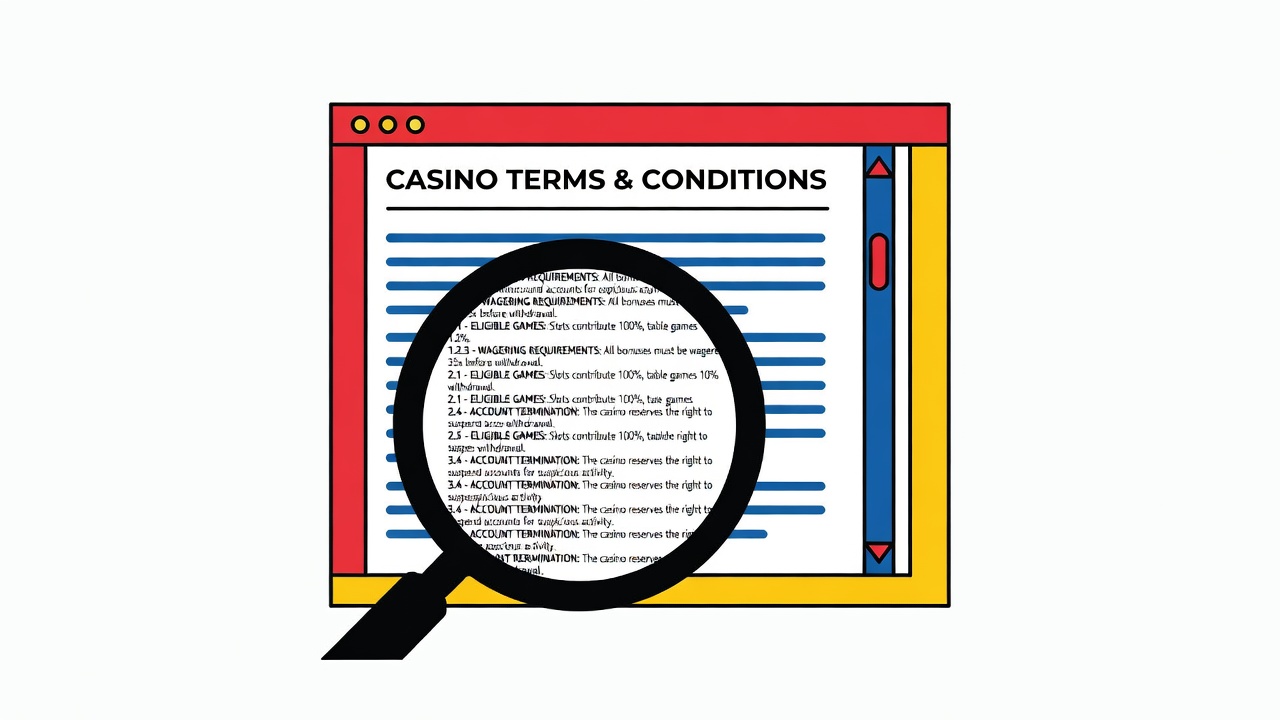
Crypto casinos work on a similar principle, except the imagination ends much faster and costs more. The terms and conditions are where the casino hides what you're actually paying for.
When you read a crypto casino's T&C, you're not reading rules. You're reading a contract where the house has written both sides. You're reading the fine print that explains why your big win might not be a win. You're reading the reason your account might get locked. You're reading the casino's permission slip to do things you haven't even considered yet.
Start with the Deposit and Withdrawal section. Casinos will tell you their rules about speed and limits. What they won't tell you: some crypto casinos freeze accounts during "unusual activity." Unusual means you won. Unusual means you withdrew five times in one week. Unusual means the house algorithm detected a pattern that made them nervous. The T&C will say something like "we reserve the right to review large account transactions." This means they're going to ask where your money came from. If you can't prove it came from a job, they'll lock you out and tell you to wait for compliance to finish checking. Compliance never finishes checking.
The Bonuses Section Is Where They Hide Everything
Crypto casinos advertise bonuses like conventional casinos advertise buffets: huge, generous, free money. The T&C explains that "free money" requires you to wager the bonus fifty times before you can cash it out. So a fifty-dollar bonus requires twenty-five hundred dollars of bets. Casinos set the games with the highest house edge (usually slots) as the only way to clear the bonus. You're betting other people's deposits at a 4 percent edge. They keep ninety-eight percent of the bonus money.
The real discovery in reading these terms is that crypto casinos are less transparent than traditional ones, not more. They use blockchain language as a magic word that makes players think they're getting honesty. They're not.
The Bonuses section also hides something uglier: the casino can cancel your bonus for "suspicious activity." Suspicious means you found a bug. Suspicious means you used basic strategy and won too much on blackjack. Suspicious means you played against the algorithm's expectation. When the casino cancels your bonus, they also confiscate any winnings you made with it. You get to keep your losses, obviously.
Next, look at the Account Restrictions and Closures section. Casinos reserve the right to close your account for any reason. You can request your money back within thirty days. After thirty days, if you don't file a claim, your balance can be forfeited. Some crypto casinos make you file claims through their support chat, which runs on a five-day response time on weekdays and never on weekends. They're counting on you forgetting.
The Responsible Gambling section is the real tell. It says they offer self-exclusion tools and deposit limits. What it doesn't say: these tools reset if you email and ask. Most casinos will lift self-exclusion limits in twenty-four hours if you contact customer service and claim you need "account access for a withdrawal." The responsible gambling technology exists for legal cover, not for actual harm reduction.
The Jurisdiction and Dispute Resolution section explains where the casino is actually located and what happens if you have a complaint. Most crypto casinos are licensed in Curaçao or Malta. Curaçao's eGaming regulation is real but minimal. Malta's is better but the casinos know the arbitration process takes six months and costs money. They're betting you'll give up.
Why This Matters
Reading T&C is not paranoia. It's the same economic calculation as the lottery ticket: you're paying for something, and you want to understand what you're actually getting. When you deposit into a crypto casino, you're entering a contract where every term favors the other side. That's not immoral. That's the game.
The casinos don't hide these terms. They publish them in eight-point font on pages four through nineteen. Reading them doesn't make you a better gambler. It makes you an informed one. You go in knowing the house already won the argument. You're just deciding if you want to play anyway.