
What Is Slippage in Crypto? Tolerance, Floors and Sandwiches
Slippage splits into pool movement, your tolerance and sandwich bots. How the minimum-received floor is set from the 0.5% default, and why zero is a risk.

PolyCasino Chain Pulse · 6 min read

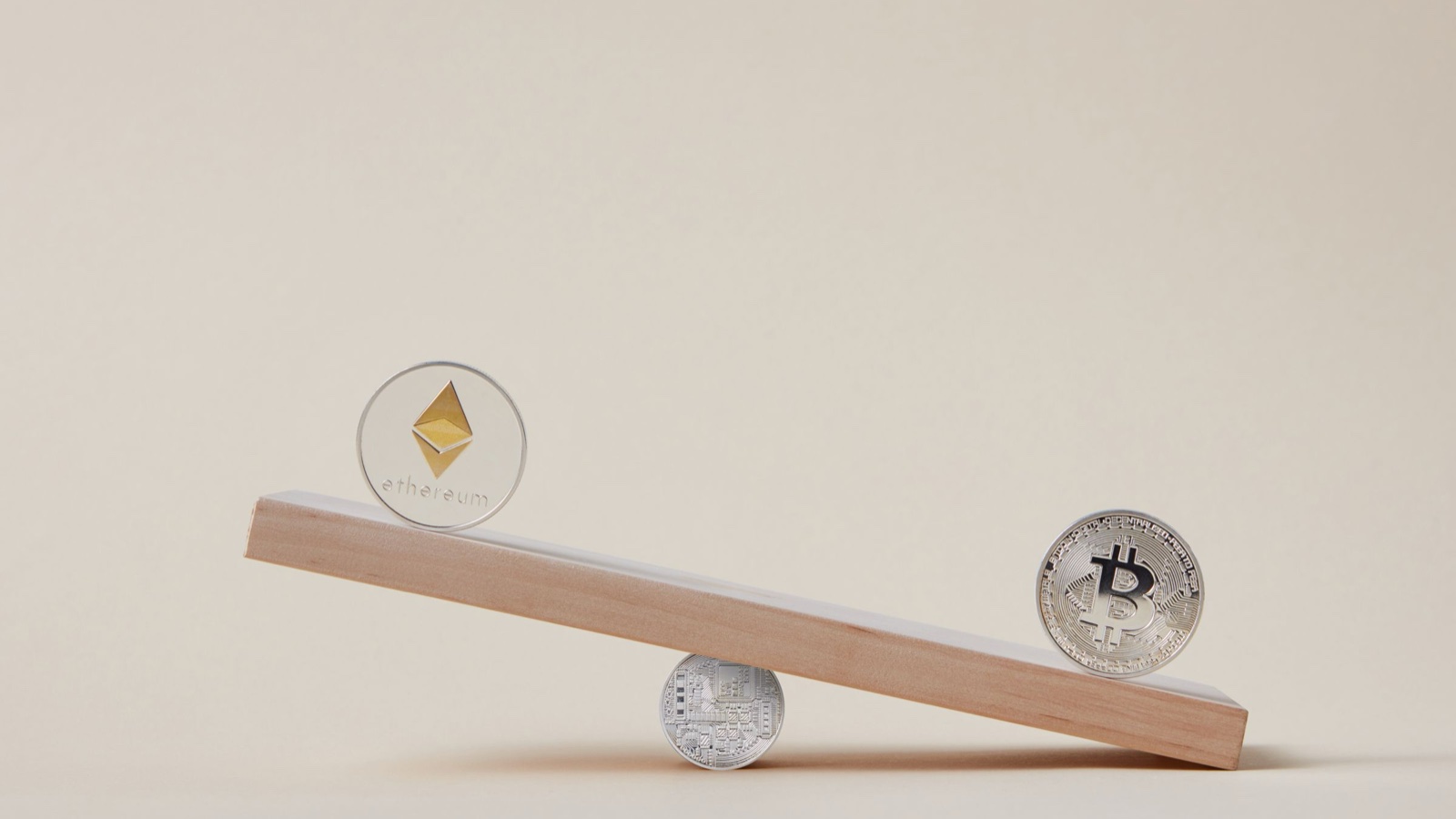
Photo: Sajad Nori on Unsplash
What is slippage in crypto? It is the difference between the price a swap quotes you and the price it actually executes at. On a decentralized exchange that gap has three parts: the pool moving while your transaction waits, the slippage tolerance you allowed, and traders who deliberately move the price around you. The tolerance turns into a hard floor on what you receive, and that floor is the only thing standing between a quote and a bad fill.
Slippage in trading: quoted price versus executed price
A quote is a snapshot of a pool at one moment; execution happens later, in whatever block your transaction lands in. Anything that trades against the pool in between changes the rate you get.
That is the mechanism, not a bug. An automated market maker prices every swap off its current reserves, so the price you see when you click is only valid if nobody else touches the pool first. In a quiet pool the gap is small. In a busy one, or with an order that is large relative to the pool, it widens.
The desk view: slippage is not one cost but a stack of them, and only one layer is under your control.
The three parts of crypto slippage
Each part has a different cause and a different fix, so it pays to separate them before touching any settings.
| Part | What causes it | What limits it |
|---|---|---|
| Price movement while pending | Other swaps land before yours | A deadline on the swap |
| Tolerance you allow | Your own setting | A tighter minimum-received floor |
| Sandwich attack | A bot trading before and after you | A tight floor, or a private mempool |
The first part is market noise. The second is a choice.
What is slippage tolerance in crypto?
Slippage tolerance is the worst rate you agree to accept, written as a percentage below the quote. In the Uniswap V2 SDK, the router swaps at a rate no worse than a user-set tolerance, which is 0.5% by default as of October 2026.
The tolerance is not a fee and not a prediction. It is permission. Set it at 0.5% and you have told the contract that any fill up to 0.5% worse than the quote is acceptable. The contract will not try to get you a better price inside that band; it only refuses fills outside it.
How the minimum-received figure is computed
The minimum-received number on a swap screen is the quote reduced by your tolerance, and the contract enforces it on chain. For a sell of an exact input amount, Uniswap's own guide describes the safety check as a minimum amount received.
The arithmetic is simple. Take the output the pool quotes, take the tolerance share of it off, and what remains is the floor. At the 0.5% default, the floor sits 0.5% below the quote. If the pool has moved, or been moved, so far that the fill would land under that floor, the swap reverts instead of executing.
For an exact-input trade, the V2 SDK hands developers this figure as minimumAmountOut for slippage calculations. Read that line, not the headline quote: it is the price you have actually agreed to.
Why a zero minimum is the real risk
A floor of zero means the swap accepts any output at all, which removes slippage protection entirely. Uniswap's V3 single-swap guide sets amountOutMinimum to zero in its demo code and flags this as a significant risk in production, saying the real value should come from the SDK or an oracle to guard against sandwiches.
The danger is not that slippage exists; it is that a floor can be left wide open. Any interface, script or bot that submits a swap with no minimum is trading on the honour system in a mempool full of searchers.
Sandwich attacks: how a loose tolerance gets exploited
A sandwich is a buy placed just before your swap and a sell just after it, timed to profit from the price move your own trade causes. Uniswap's integration guide warns that without safety checks a bad actor can insert transactions on both sides of a swap.
Ethereum's MEV documentation describes how it is done: searchers watch the mempool for large DEX trades and wrap them. The buy in front pushes the price toward your floor, your swap fills near that floor, and the sell behind captures the difference. The outcome for the user, in ethereum.org's words, is increased slippage and worse execution.
This is where the tolerance and the attack connect. The bot can only push the price as far as your minimum allows before your swap would revert. A loose tolerance is room for the sandwich; a tight one shrinks it.
Deadlines: the second guard
A deadline is a time limit on the swap, separate from the tolerance. In Uniswap V3 it is the unix time after which a swap will fail, which protects against transactions that sit pending while prices swing.
The tolerance bounds how bad the price can get. The deadline bounds how long the price has to get bad. A swap with a sensible floor but no practical deadline can still execute much later than you intended, at the edge of the band you allowed.
How to reduce slippage on a swap
You can bound slippage, not eliminate it. The levers follow straight from the three parts above:
- Check minimum received, not the quote. That line is the price you are committing to.
- Keep the tolerance as tight as the market allows. Too tight and swaps revert in fast markets; too loose and you are paying for the room a bot will use.
- Set a short deadline so a stuck transaction fails rather than filling late.
- Size trades to the pool. Large orders into thin pools move the price on their own and attract searchers.
- Use a private route. Flashbots Protect sends transactions to a private mempool hidden from sandwich bots, per its documentation as of December 2025. Transactions are only included if they do not revert, so a swap that would fail its floor costs no fee there.
None of this guarantees a fill at the quote. It narrows the gap to the part that is genuinely market movement.
Pool questions
What does slippage mean in trading?
It is the gap between the price you were quoted and the price your order actually filled at. On a DEX that gap comes from the pool moving before your swap lands, plus anyone who trades around you on purpose.
How much slippage is good?
There is no universal number, only a trade-off. Uniswap's SDK starts from a 0.5% default as of October 2026; a tighter setting fails more often in fast markets, a looser one gives sandwich bots more room.
How to avoid slippage trading?
You cannot remove it entirely, but you can bound it: keep a real minimum-received floor, set a short deadline, split or skip large trades into thin pools, and route through a private mempool so bots never see the order.
Chain and source links
- Uniswap Labs docs: Pricing (Uniswap V2 docs), accessed October 2026
- Uniswap Labs docs: Single swaps (Uniswap V3 docs), accessed October 2026
- Uniswap Labs docs: Trading from a smart contract (Uniswap V2 docs), accessed October 2026
- ethereum.org: Maximal extractable value (MEV), accessed October 2026
- Flashbots: MEV Protection Overview, updated December 2025
More from PolyCasino
205 pulses by PolyCasino Chain Pulse

Wallet playOct 21 · Wed · PolyCasino
Liquidity Pool Crypto Math: Price, Fees and LP Share Value

Bankroll plansOct 19 · Mon · PolyCasino
S&P 500 Prediction Market Odds: Reading Brackets Net of Fees

Wallet playOct 16 · Fri · PolyCasino
Stablecoins Liquidity Pool Mechanics: StableSwap and Depegs
Wallet playOct 16 · Fri · PolyCasino
Impermanent Loss Calculator: What the Formula Hides
Sports oddsOct 16 · Fri · PolyCasino
Prediction Market Odds: Converting Share Prices With Fees

Poker roomsOct 13 · Tue · PolyCasino
The History of Online Poker: From IRC to Moneymaker

Baccarat tablesOct 11 · Sun · PolyCasino
Why Chasing the Dragon Bet Can Wreck a Baccarat Session
Poker roomsOct 9 · Fri · PolyCasino
Tom Dwan: The Mystery of Durrrr's Biggest Online Pots
Up next
pulses that share a track with this one
Wallet playOct 21 · Wed · PolyCasino
Liquidity Pool Crypto Math: Price, Fees and LP Share Value
Wallet playOct 16 · Fri · PolyCasino
Stablecoins Liquidity Pool Mechanics: StableSwap and Depegs
Wallet playOct 16 · Fri · PolyCasino
Impermanent Loss Calculator: What the Formula Hides
Baccarat tablesOct 1 · Thu · PolyCasino
Provably Fair Baccarat: How It Differs From Standard RNG
Wallet playAug 27 · Thu · PolyCasino
How to Read a Crypto Casino's Terms and Conditions
Wallet playAug 23 · Sun · PolyCasino
How to Move Crypto From an Exchange to a Casino Wallet

Wallet playAug 19 · Wed · PolyCasino
Dogecoin at Online Casinos: Is It Practical or Just for Fun
Wallet playAug 17 · Mon · PolyCasino
How to Verify a Provably Fair Game Result Yourself
Wallet playJul 30 · Thu · PolyCasino
Dogecoin at Online Casinos: Is It Practical or Just Novelty
Wallet playJul 21 · Tue · PolyCasino
Crypto Casino Deposit Fees: What Actually Eats Your Balance