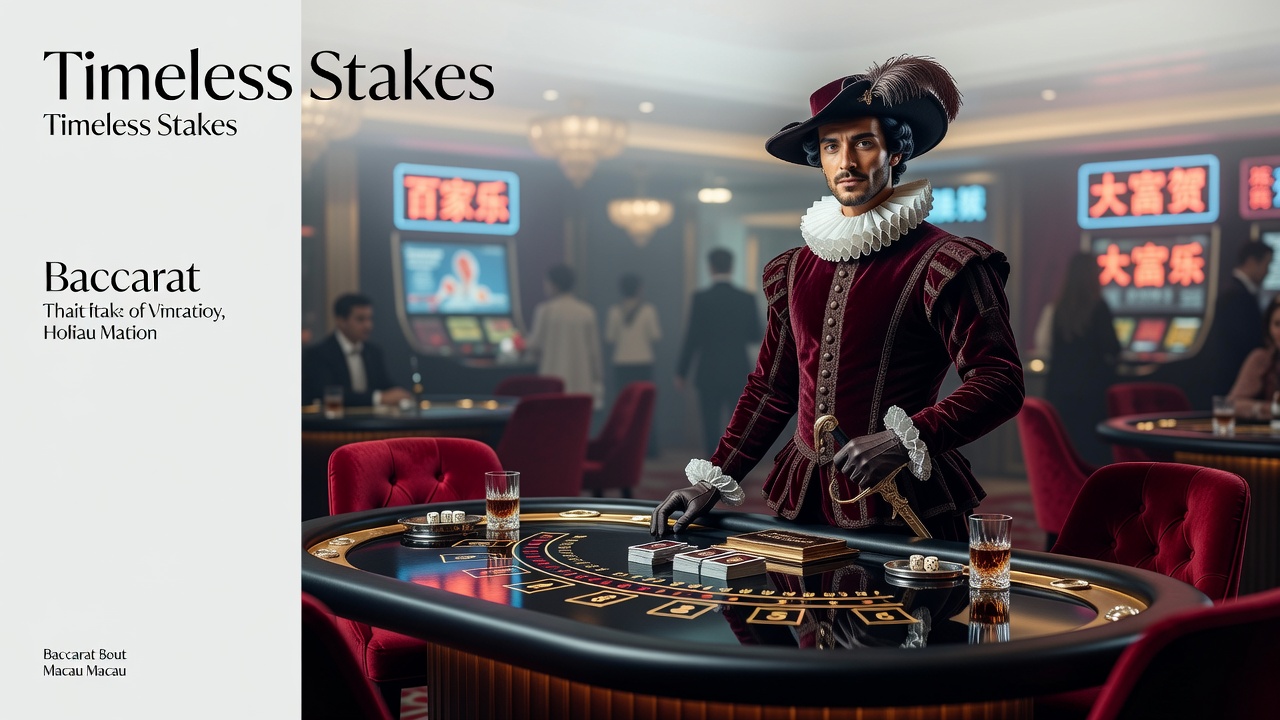
Kerry Packer walked into the MGM Grand in 1997 with 20 million dollars in chips. He walked out lighter 63 hours later. How does a billionaire owner of the Nine Network, one of Australia's largest media companies, lose that much in three days and consider it a great time.
The Setup
Packer was not a compulsive gambler. He was a collector of experiences. He owned racehorses and golf courses. He bought stakes in media companies on whims. Gambling was simply another venue for the logic: put down enormous money, experience the fluctuation, and see what happens.
The MGM Grand was the largest hotel in the world at the time. Packer had a suite. He had a private baccarat table set up in his room. Dealers rotated in shifts. The house edge on baccarat is approximately 1.06 percent on a pure bet, but in high-limit play, the stakes were so large that variance swallowed the edge entirely.
Packer vs Standard Whale
A typical whale or high-roller at the MGM Grand had a bankroll of 5 to 10 million. They were junket players from Asia, or they were tech executives, or they were inherited money. They played conservatively within the scale of their wealth, aiming for a 10 to 20 percent edge on their bankroll.
Packer was different. He bet indifferently to volatility. A hand of baccarat at 500,000 USD per bet (common for Packer) has a range of outcomes. Lose 500,000. Win 500,000. The math is binary. After 63 hours and hundreds of hands, the variance ran against him.
The Math
Baccarat at 1.06 percent house edge means that for every 1 million dollars wagered, the house expects to win 10,600 dollars. Packer, playing for 63 hours at roughly 40 hands per hour (high-limit pace), and betting on average 300,000 USD per hand, wagered approximately 750 million dollars.
The expected loss was about 8 million dollars. Actual loss was 20 million. This suggests either a run of bad variance (entirely plausible over this sample size) or statistical noise (also plausible). It was not evidence of cheating or advantage play. It was just the long tail of a 750-million-dollar sample.
Why Packer Loved It
After the session ended, Packer commented that he'd had a wonderful time. Not because he won. Because he had played at the highest stakes in the world, against the best odds, and he had experienced the full intensity of the game. He was not chasing losses. He was purchasing an experience.
This is the distinction between problem gambling and recreational extreme wealth. Packer's 20 million loss was 0.5 percent of his net worth. A person with 4 million dollars losing 100,000 is equivalent. For Packer, it was noise.
The Comparison
Standard high-roller play is driven by asymmetric risk: players want to maximize upside while minimizing downside. Packer's play was driven by indifference: he was there to experience the game at a scale where fear and caution became irrelevant.
Most casinos prefer the standard high-roller because their expected value is more predictable. Packer was acceptable because the variance cut both ways. Over his lifetime, Packer had wins and losses that roughly balanced out. The 20 million dollar loss in 1997 was matched by 30 million dollar wins in other sessions.
The asymmetry was that the casino knew Packer would return and that the law of large numbers would eventually favor the house. And it did.